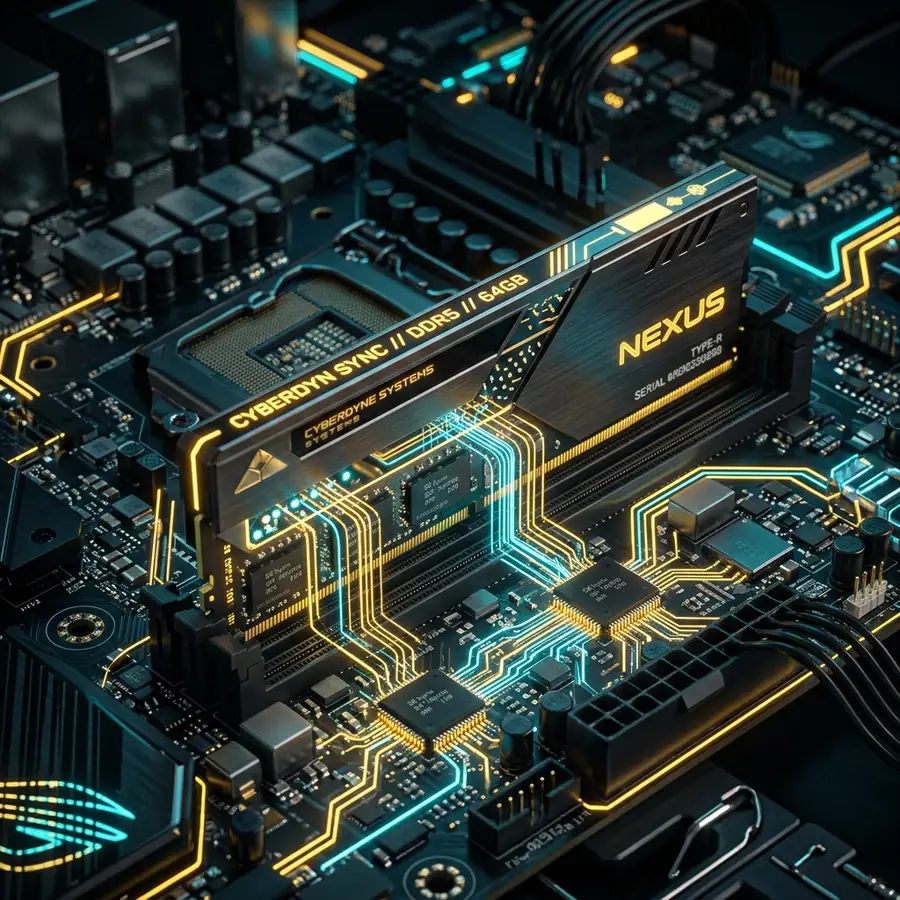
High Bandwidth Memory (HBM) demand driven by AI accelerators has tightened global semiconductor capacity, altering server component costs.
We aren't seeing massive public supply-chain headlines like the pandemic-era chip shortages, but the pinch is real. And it is being driven by one critical component that the tech industry is quietly fighting over: Random Access Memory (RAM).
In the current Artificial Intelligence gold rush, data centers are the mines, GPUs are the heavy machinery, and high-performance memory is the shovel. And right now, AI hyperscalers are buying up every shovel in sight.
The Zero-Sum Wafer Game
To understand the crisis, we must look at how silicon wafers are allocated. The AI accelerators driving today's training runs (like Nvidia’s Blackwell architecture or Google’s custom TPUs) rely on a specialized, high-performance form of RAM called High Bandwidth Memory (HBM).
HBM is not the same memory used in your laptop or phone. It consists of vertically stacked DRAM dies connected via microscopic wires (TSVs) sitting directly next to the processor. However, standard consumer DDR5, mobile LPDDR5X, and enterprise HBM all share the same exact raw material: silicon wafers processed in the same fabrication plants (fabs).
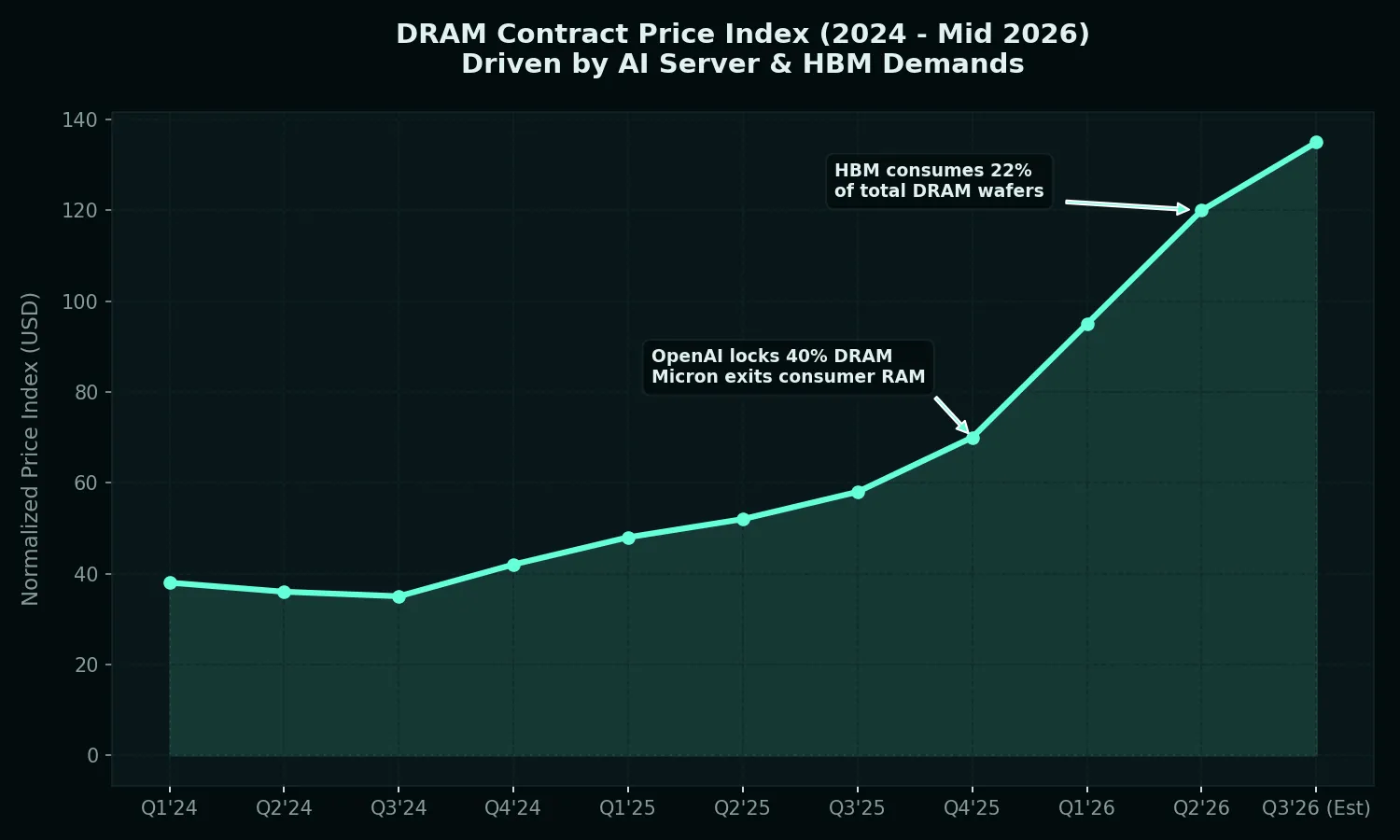
It is a zero-sum game. HBM production is incredibly complex, with lower yields, and it consumes roughly 3x the wafer capacity of standard DRAM. According to recent TrendForce reports, HBM is projected to swallow up over 22% of global DRAM wafer capacity by the end of 2026. Every wafer dedicated to a stack of HBM for an enterprise GPU is a wafer that cannot be turned into memory for a gaming PC or mobile phone.
The Cartel and the "DRAM Beggars"
The global memory chip market is highly centralized. Approximately 93% of global DRAM supply is controlled by just three giants: Samsung, SK Hynix, and Micron.
In late 2025, Micron made a massive strategic pivot, announcing it was stepping away from consumer Crucial RAM and SSD lines to focus entirely on higher-margin AI and enterprise buyers. This single move sent shockwaves through the consumer market, leaving only Samsung and SK Hynix to supply the global tech industry.
Meanwhile, AI tech giants are in a state of panic. OpenAI reportedly secured an estimated 40% of global DRAM production in late 2025 to lock in its long-term infrastructure.
This sparked a scramble. In early 2026, Korean media described US Big Tech procurement teams as "DRAM beggars," setting up camp in long-term hotels around Pangyo and Bundang (South Korea's silicon valley) to beg Samsung and SK Hynix executives for memory allocations. At Google, hardware executives responsible for securing HBM for their custom TPUs were reportedly fired after failing to lock down adequate supply.
Squeezing the Consumer
The impact of this corporate memory hoarding is now spilling directly into consumer electronics:
- Smartphones: Smartphone manufacturers are facing massive cost increases. Apple is reportedly paying a 230% premium (around $70 per unit compared to the historic $25-$29 range) for the 12GB LPDDR5X memory required for the iPhone 17 Pro. These costs are inevitably being passed down to consumers.
- Laptops & PCs: Companies like Dell, Lenovo, and HP have announced price increases. Some budget and mid-tier laptop configurations are actively reversing trend, limiting base configurations to 8GB of RAM rather than upgrading to 16GB, to keep retail prices down. A single high-end 256GB DDR5 RAM kit now costs more than a flagship gaming graphics card.
- Consoles & GPUs: Next-generation consoles like the PlayStation 6 and the next Xbox are facing potential delays or hardware compromises due to soaring GDDR memory costs. Nintendo has faced market valuation pressure due to margins on the upcoming Switch successor. Rumors also suggest Nvidia may price its RTX 5090 as high as $5,000, partially driven by extreme GDDR7 memory constraints.
Is the AI Bubble Setting Up a Crash?
This brings us to the ultimate question: Are memory manufacturers setting themselves up for a catastrophic crash?
Fabs are incredibly capital-intensive and take at least two years to build. Suppliers are extremely hesitant to build new factories because they have seen this cycle fail before. In the mid-2010s, manufacturers expanded capacity rapidly to meet the smartphone boom. When smartphone sales cooled, the market flipped into oversupply, and memory prices collapsed, hurting margins for years.
Today, memory makers are prioritizing profit margins over volume. Even if the AI hype cools down and the bubble deflates (a risk that OpenAI CEO Sam Altman has openly acknowledged), Samsung and Hynix have protected themselves by locking in long-term supply contracts through 2026 and 2027. Buyers who over-allocated will still be forced to pay peak prices.
Until new fabs come online in late 2027 or 2028, or the demand for generative AI compute drops drastically, consumer electronics will remain hostage to the server room. The RAM crisis is a stark reminder that in a gold rush, it is the shovel makers who set the rules.