
Calorie tracking is a staple of modern fitness apps. Almost every popular calorie tracker on the market shares a common set of frustrations: they demand monthly subscriptions, show constant ads, require continuous internet connectivity, and send your personal eating habits to third-party data brokers.
NomAI takes a different approach. It is a free, open-source, and entirely offline calorie tracking app for Android, built on absolute privacy and on-device AI.
- GitHub Repository: github.com/breejesh/nom.ai
The Three Pillars of NomAI
NomAI was designed from the ground up to challenge standard design patterns in mobile application development, focusing on three core pillars:
1. 100% Free & Open-Source (FOSS)
There are no premium paywalls, no locked charts, and no payment gateways. The entire application is MIT licensed and completely free to use, modify, and build upon. The full source code, including the prompt engineering templates and model configuration, is available for anyone to audit, fork, or contribute to.
2. Privacy-First (No Server Backend)
NomAI does not have a remote server. There is literally no backend infrastructure to send data to. Your physical metrics, meal history, and nutritional goals remain exclusively in your device's local Room database. This is not privacy by policy; it is privacy by architecture.
3. Local & Offline-First LLM Inference
All meal analysis and macro estimations are performed on-device. Powered by Google Gemma-2B and Google's LiteRT runtime, the app parses natural language text input directly inside your phone. No internet connection is ever required for core functionality.
App Interface & Screen Showcases
To see how NomAI looks and behaves, let's explore the screens and user flows.
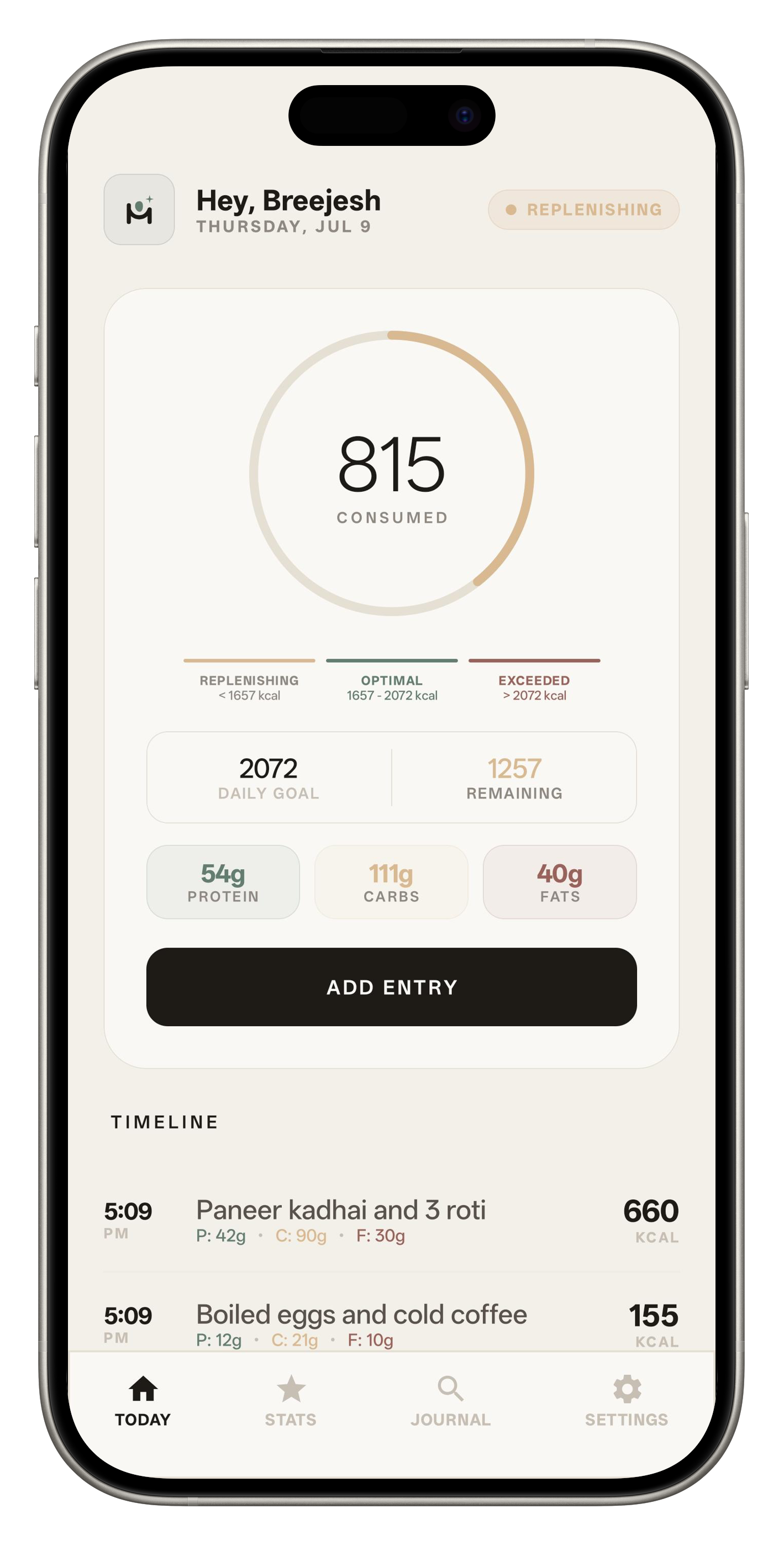
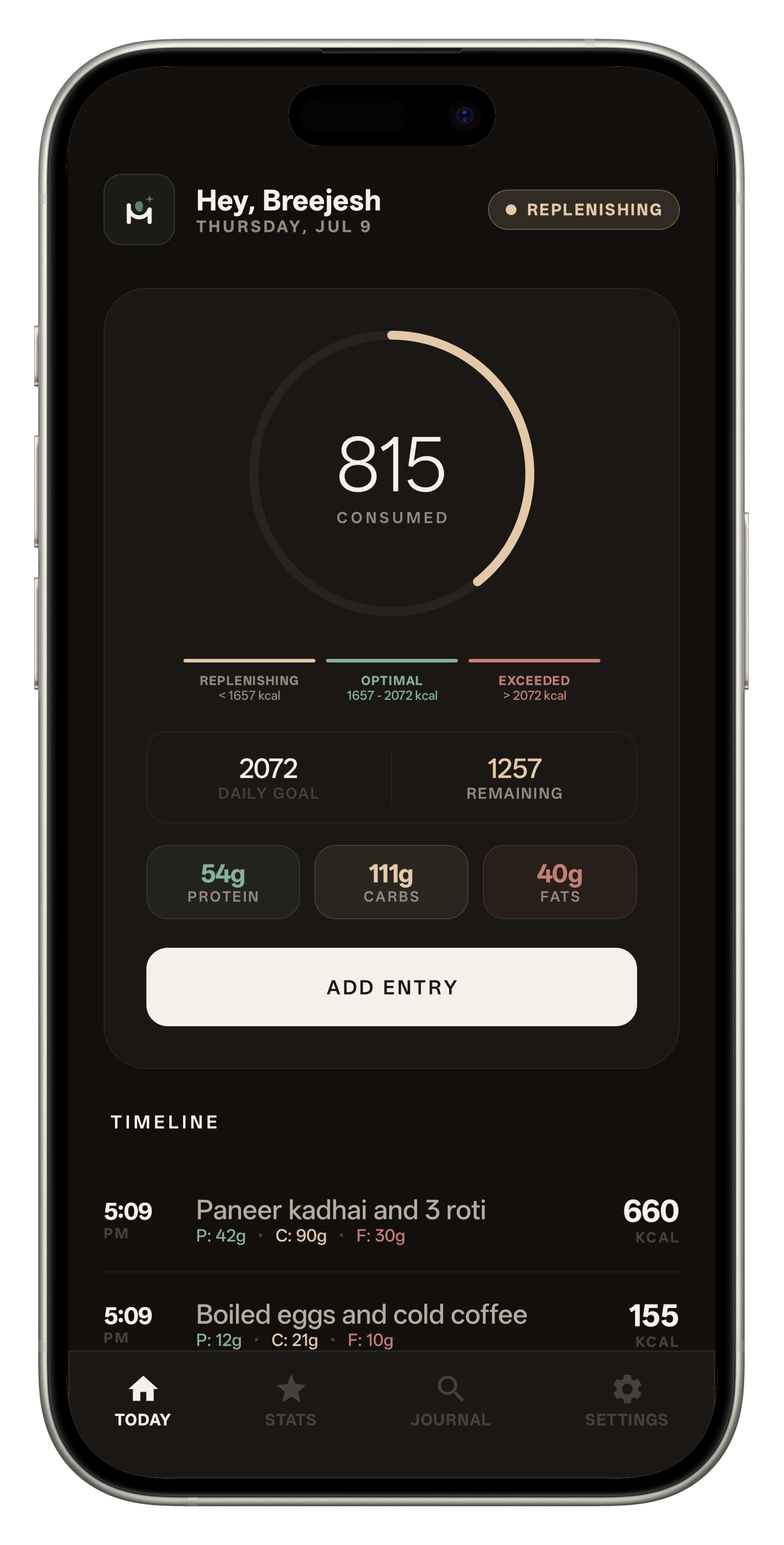
Theme Adaptability
Here is how the clean, minimalist layout shifts between the warm off-white light theme and the midnight-espresso dark theme:
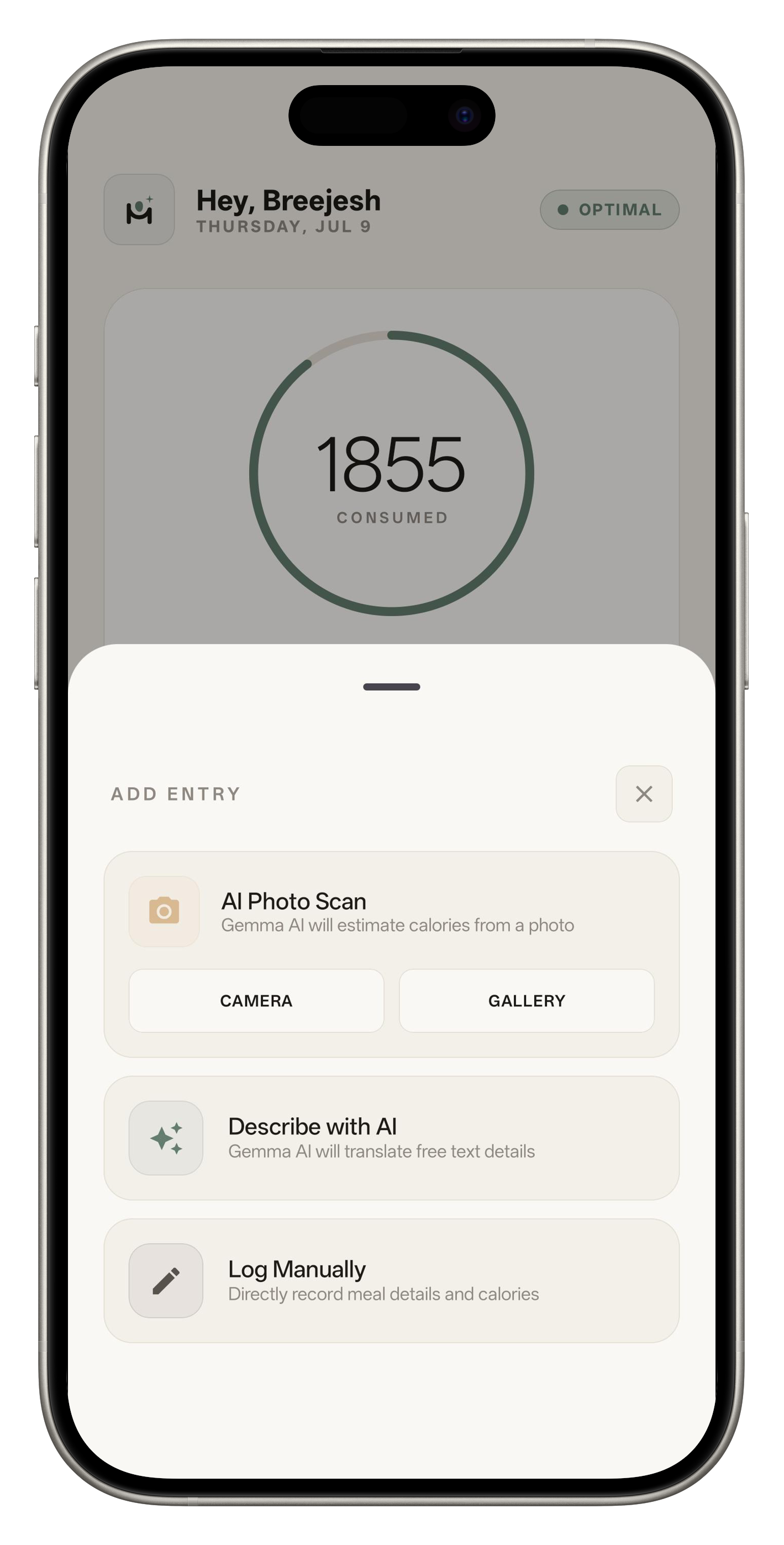
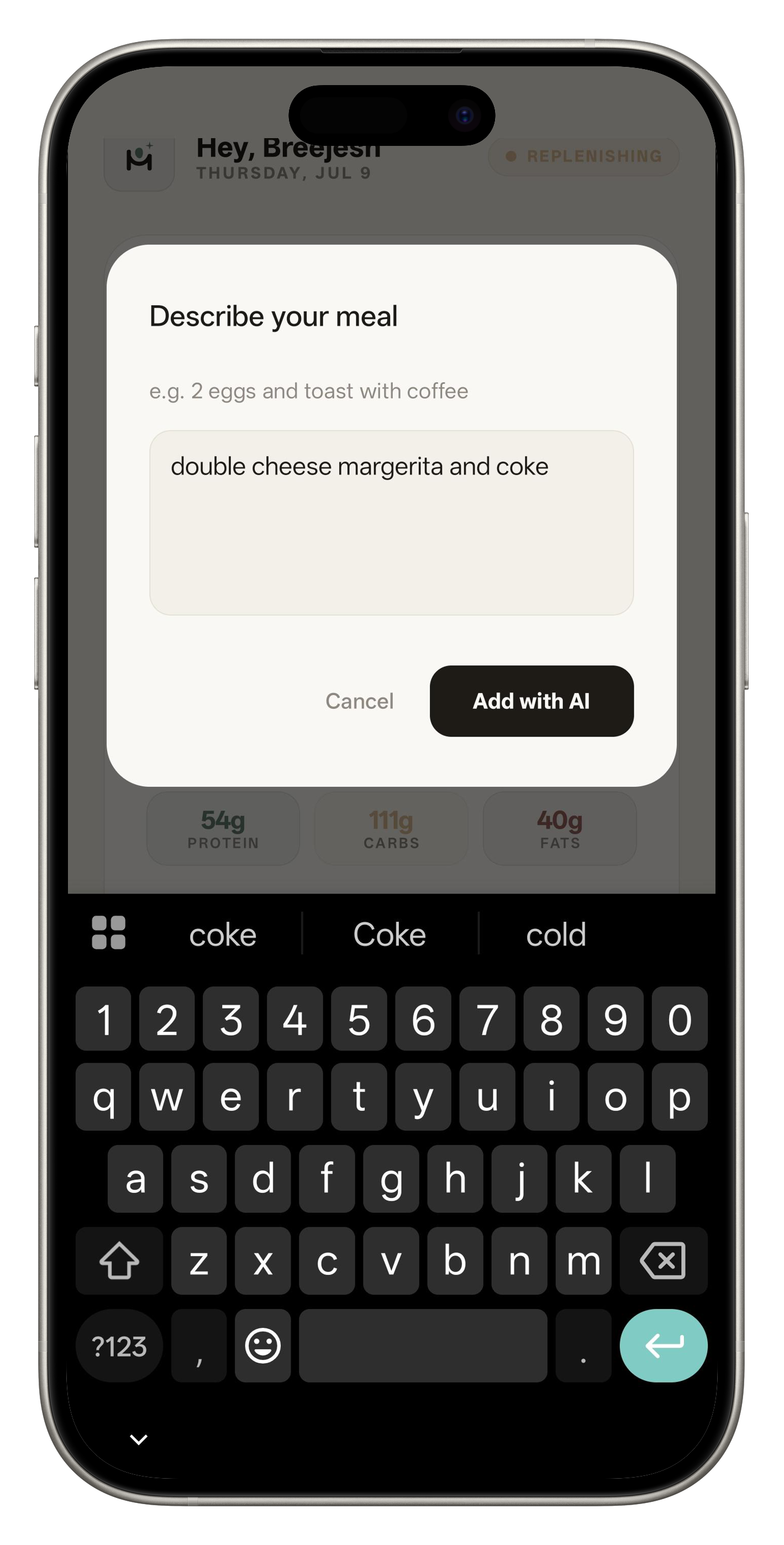
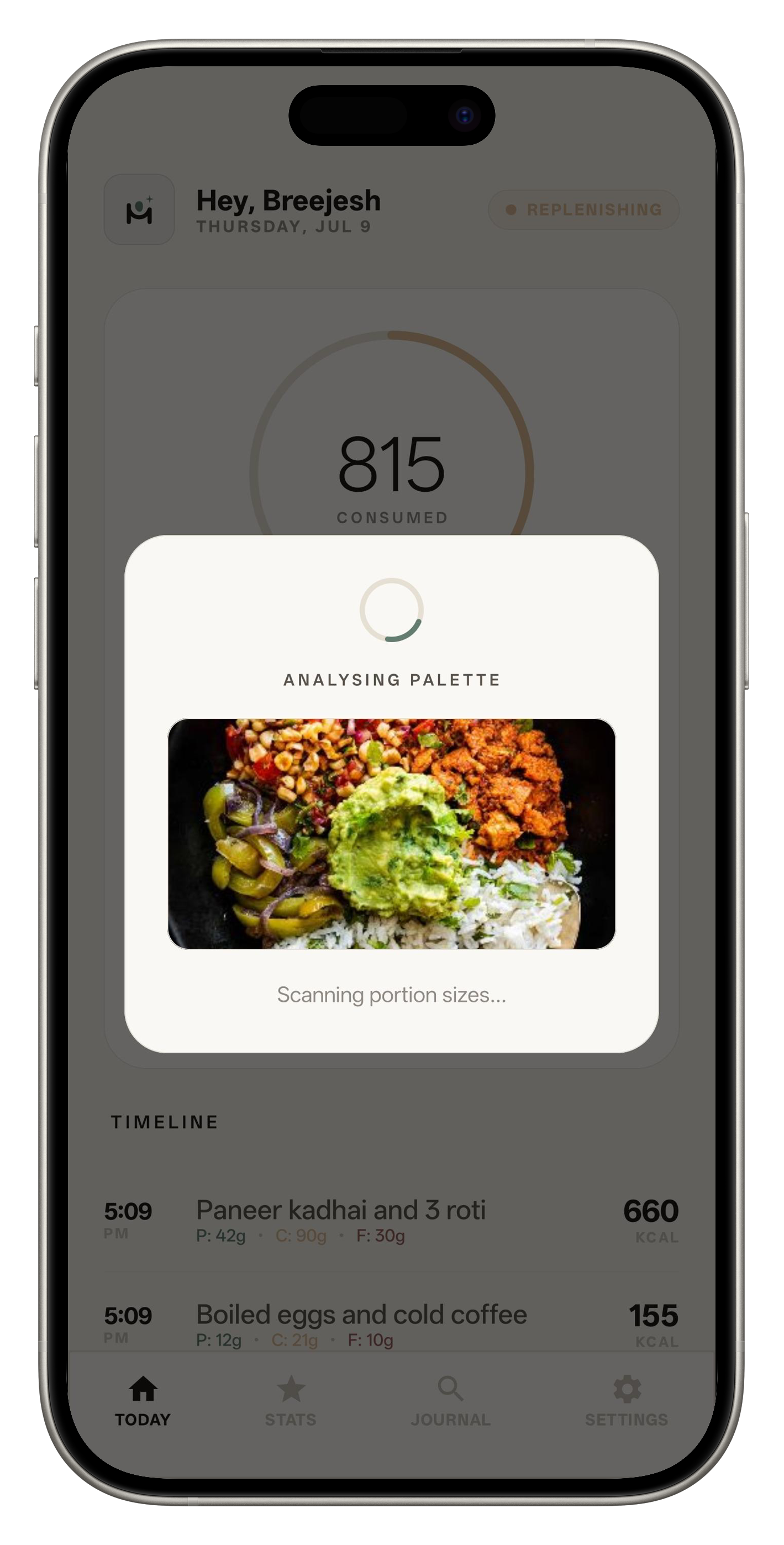
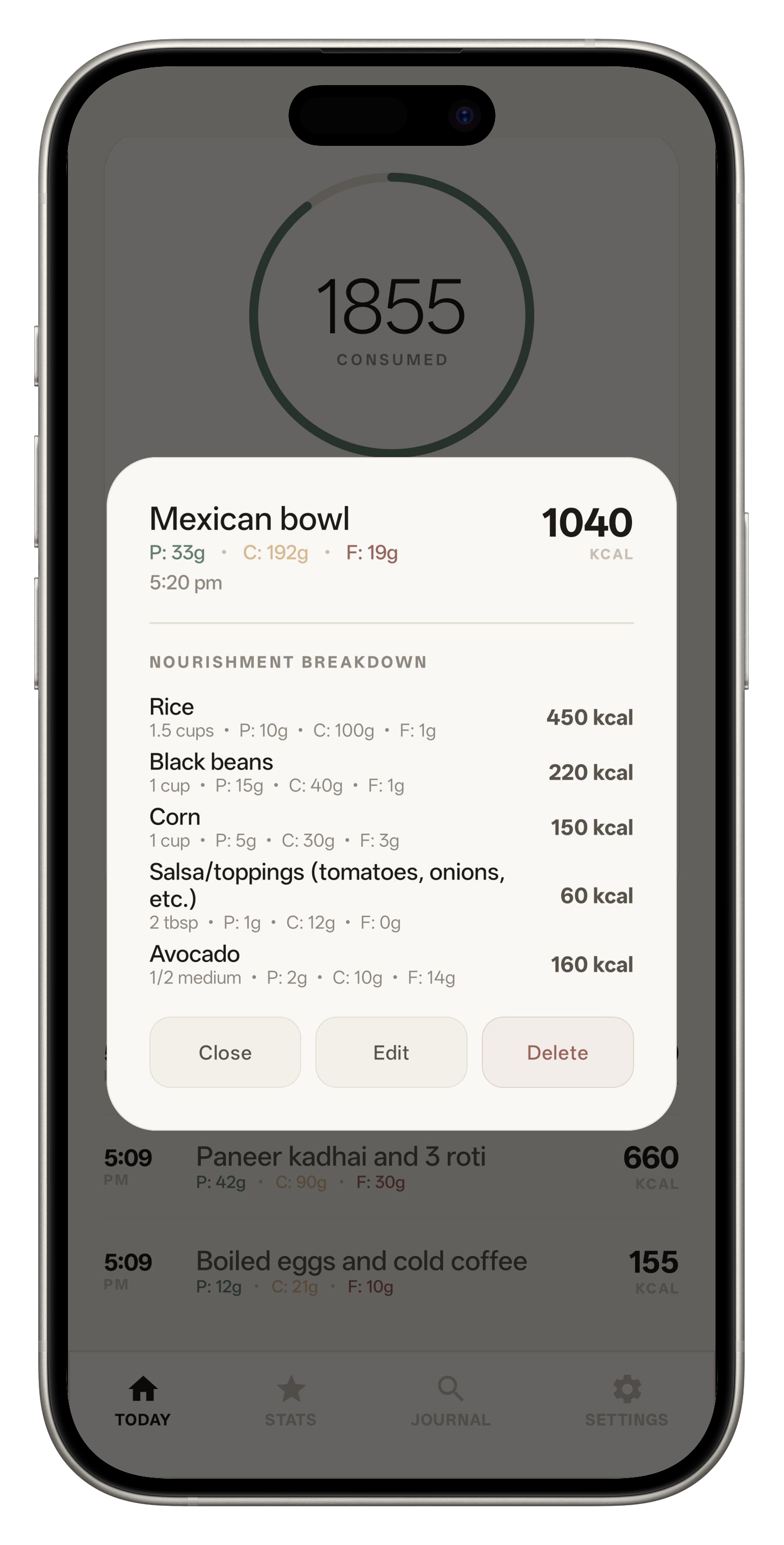
Adding a Meal
Tracking a meal is fully local: describe it naturally or snap a photo, review the extracted elements, and log.
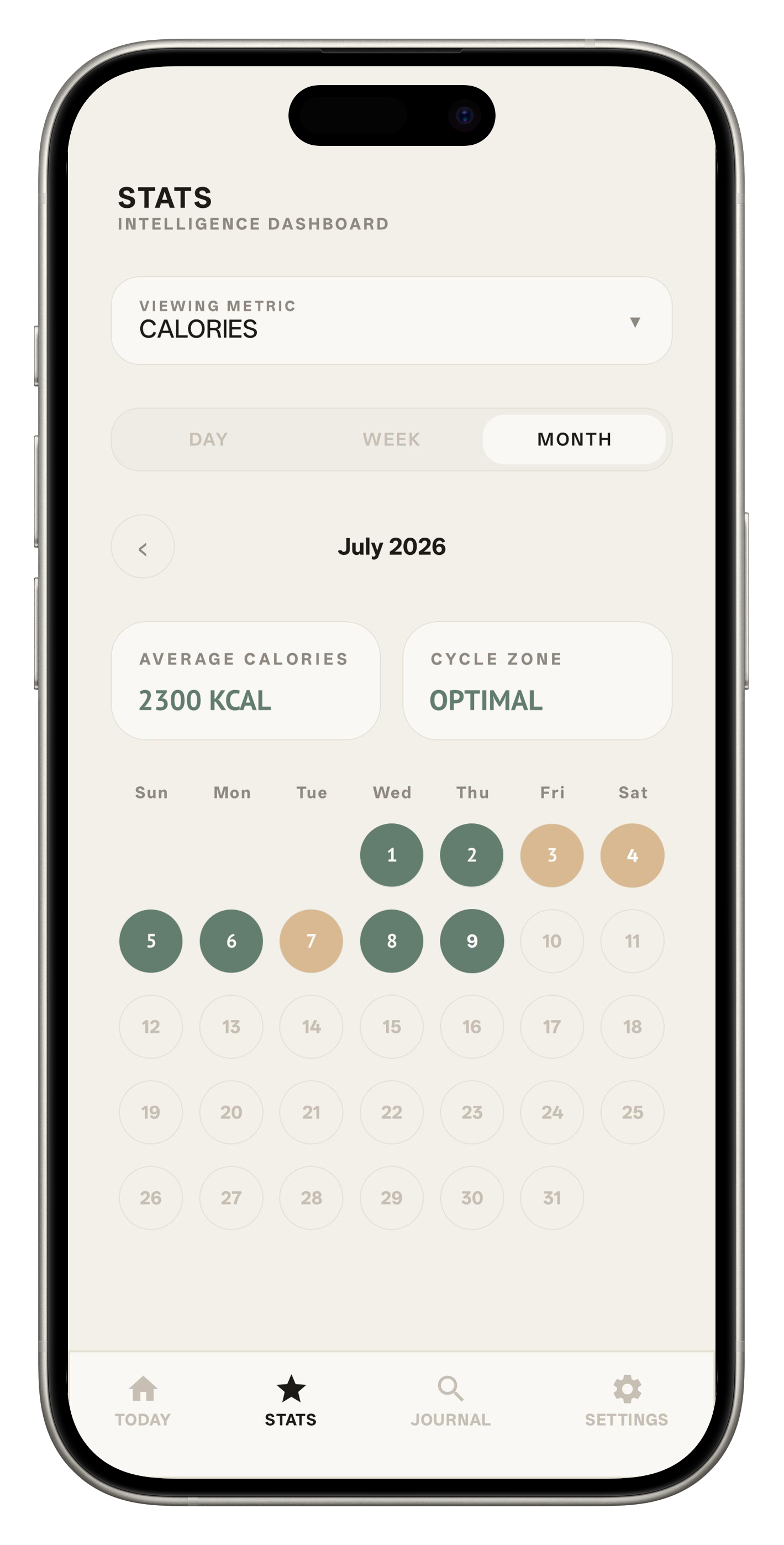
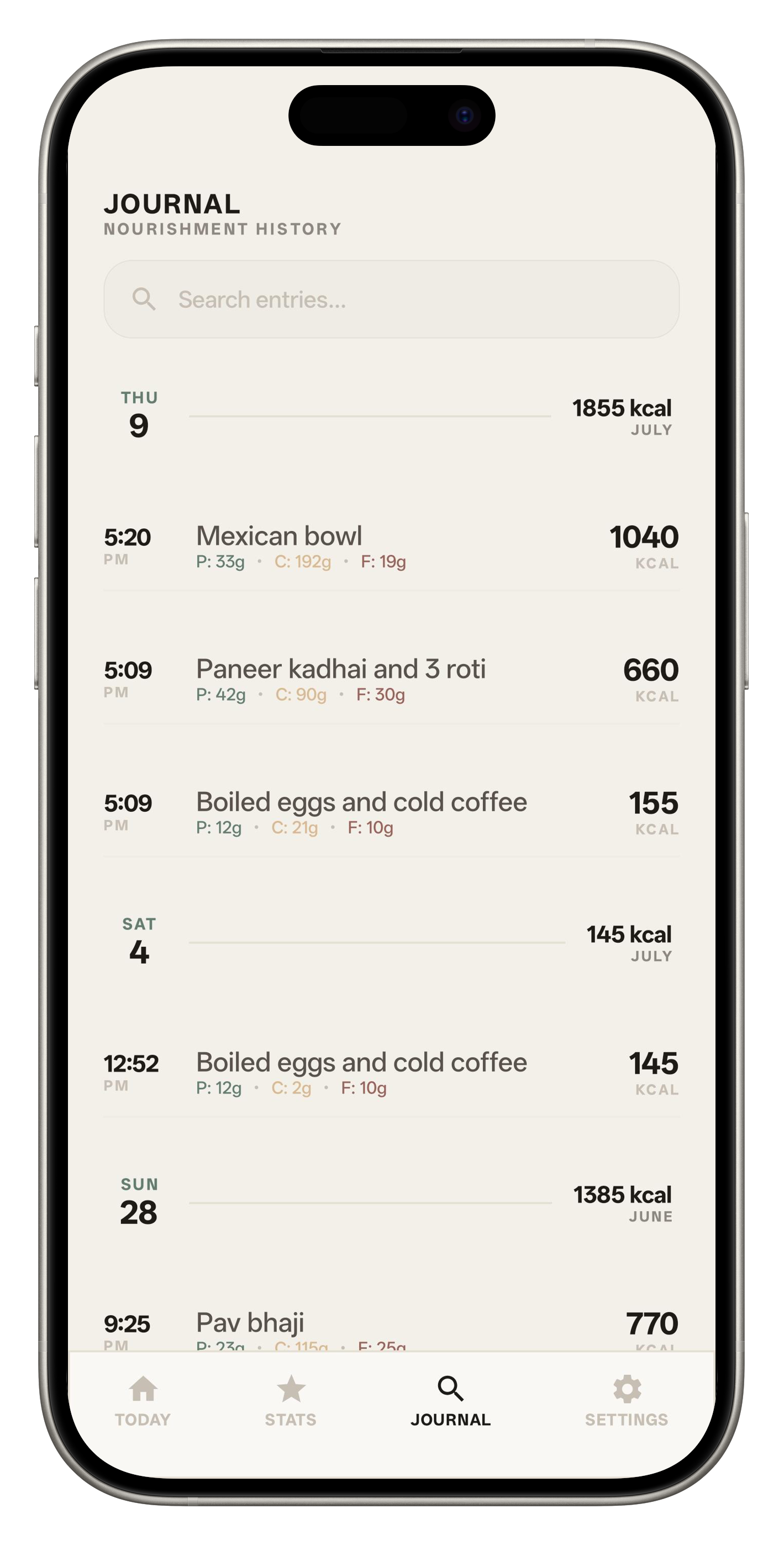
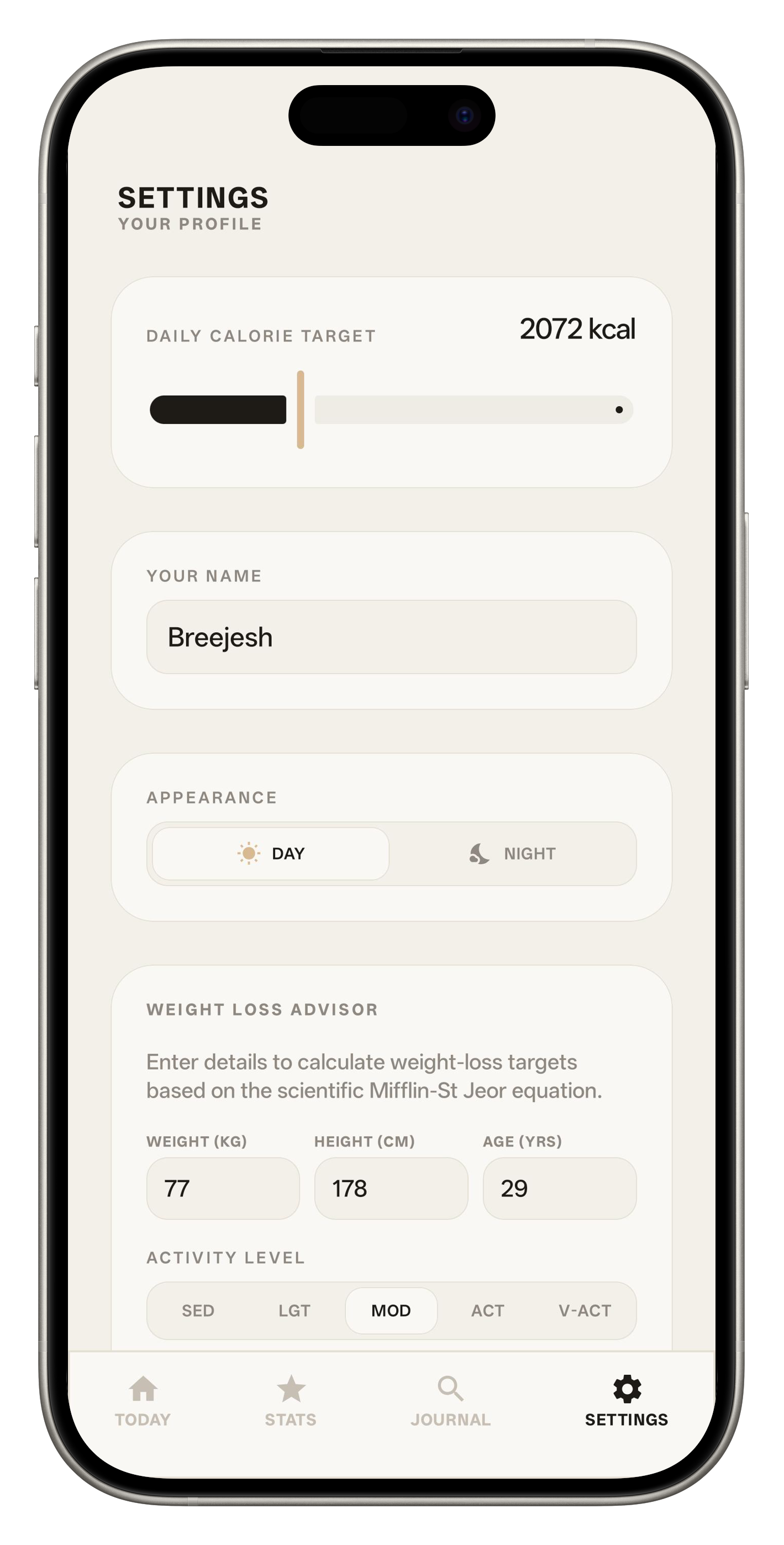
Insights, Journal & Settings
Check weekly charts, browse your history, or customize your experience offline.
Prompt Engineering: Getting Reliable Nutrition Estimates
The most technically interesting challenge in NomAI is extracting structured, reliable nutritional data from a 2-billion parameter model that was not specifically trained for nutritional analysis.
The solution is a carefully crafted prompt template that constrains the model's output:
fun buildNutritionPrompt(userInput: String): String = """
You are a nutritional analysis assistant. Analyze the following meal
and estimate its nutritional content.

RULES:
- Use USDA standard reference values for common foods
- Use standard serving sizes when portions are not specified
- Round all values to the nearest integer
- Respond ONLY with the JSON below, no other text

OUTPUT FORMAT:
{"items": [{"name": "string", "calories": int, "protein_g": int,
"carbs_g": int, "fat_g": int, "serving": "string"}],
"total": {"calories": int, "protein_g": int, "carbs_g": int, "fat_g": int}}

MEAL: $userInput
""".trimIndent()
Why this structure works:
- Explicit format specification prevents the model from generating conversational responses or explanations alongside the data.
- Negative instructions ("no other text") reduce the chance of preamble text that would break JSON parsing.
- Reference to USDA values anchors the model's estimates to a known standard rather than allowing arbitrary guesses.
- The
servingfield provides transparency: the user can see what portion size the model assumed and correct it if needed.
Handling Model Failures
Small models are not perfectly reliable. NomAI implements a multi-layer fallback strategy:
- JSON Validation: Every response is parsed with a strict JSON deserializer. If parsing fails, the prompt is retried with an even more constrained format (single-item analysis).
- Sanity Checks: Estimated calories are validated against reasonable bounds (e.g., a single food item claiming 10,000 calories is rejected). Per-macro totals are checked against the total calorie count (calories ≈ protein×4 + carbs×4 + fat×9).
- User Correction: If the model's estimate looks off, the user can tap any field to manually override it. The corrected values are stored alongside the original estimate, which could eventually be used for fine-tuning or evaluation.
Technical Stack & Architecture
Built with modern Android standards, NomAI is a practical implementation of on-device machine learning:
- Jetpack Compose: A modern declarative UI toolkit that keeps the interface responsive, fluid, and beautiful. The reactive state model pairs naturally with asynchronous LLM inference, so partial results can stream directly into the UI.
- LiteRT-LM SDK: Google's high-performance generative AI runtime, using hardware acceleration (GPU/NPU) to run Gemma models with minimal battery drain. The model runs on
Dispatchers.IOto keep the UI thread free. - Room Database: A local SQLite abstraction layer for secure, fast storage of meal logs and user goals. Room's Flow-based queries enable real-time UI updates when new meals are logged: daily totals, weekly trends, and macro breakdowns all update instantly.
- Hilt (Dependency Injection): The LLM engine is provided as a singleton scoped to the application lifecycle, ensuring the model is loaded once and shared across all features that need it.
- Kotlin Coroutines & Flow: All LLM operations are wrapped in structured concurrency. StateFlow drives the UI, while SharedFlow handles one-off events like error toasts and navigation.
Challenges & Lessons Learned
Building an offline-first LLM app surfaced several non-obvious engineering challenges:
Model Accuracy on Uncommon Foods
Gemma 2B performs well on common Western foods (eggs, toast, chicken breast) but struggles with regional dishes, ethnic cuisines, and brand-name products. A prompt like "I had a plate of dal makhani with two rotis" may produce reasonable calorie estimates but can be off by 20-30% on individual macros. The accuracy gap widens further with complex dishes that have highly variable preparation methods.
Mitigation: NomAI always presents estimates with a subtle "estimated" label and encourages manual adjustment for complex meals.
Ambiguous Portions
When a user says "I had some rice", how much rice is "some"? The model defaults to USDA standard serving sizes (1 cup cooked, ~200g), but user intent varies wildly. A bodybuilder's "some rice" could be 3 cups.
Mitigation: The serving field in the JSON response makes the model's assumption visible. Users can tap to adjust.
Memory Pressure
Running a 2B parameter model alongside a full Compose UI, Room database, and potentially other apps puts real strain on device memory. On devices with 6 GB of RAM, the app needs to be aggressive about releasing resources: clearing bitmap caches, using lazy loading for historical meal data, and monitoring memory pressure callbacks.
Mitigation: NomAI registers a ComponentCallbacks2 listener and, when memory gets critical (TRIM_MEMORY_RUNNING_LOW), releases the LLM engine and shows a "reload" button instead of keeping it resident.
First-Launch Download
The model file is ~1.4 GB, far too large to bundle in an APK. NomAI downloads it on first launch, which creates a critical onboarding UX moment. Users on slow connections may wait 5-10 minutes.
Mitigation: A progress bar with estimated time remaining, download pause/resume support, and the ability to use the app's manual entry mode while the model downloads in the background.
Zero Servers. Zero Subscriptions.
Calorie trackers did not need to become monthly SaaS subscriptions with telemetry trackers. We just accepted it because running offline models on phones was hard.
With Gemma 2B, LiteRT, and Room, it is not impossible anymore. The full source code is on GitHub. If you want an app that calculates macros without asking for your email or your credit card, build the APK and see for yourself.